
When “Being Green” Isn’t Enough: Mining’s Sustainability Dilemma
Ernst & Young’s latest report on risks in the mining sector highlights a surprising shift: sustainability, once at the heart of corporate priorities, is now moving down the rankings. This may seem worrying, but it is also a sign that requires careful interpretation. Today, mining companies face increasingly complex challenges such as declining ore grades, operational pressure, soaring global demand for metals essential to the energy transition, difficulties accessing capital, and tightening regulatory requirements. In this context, some companies no longer see sustainability as a strategic driver, but rather as an additional risk to manage.
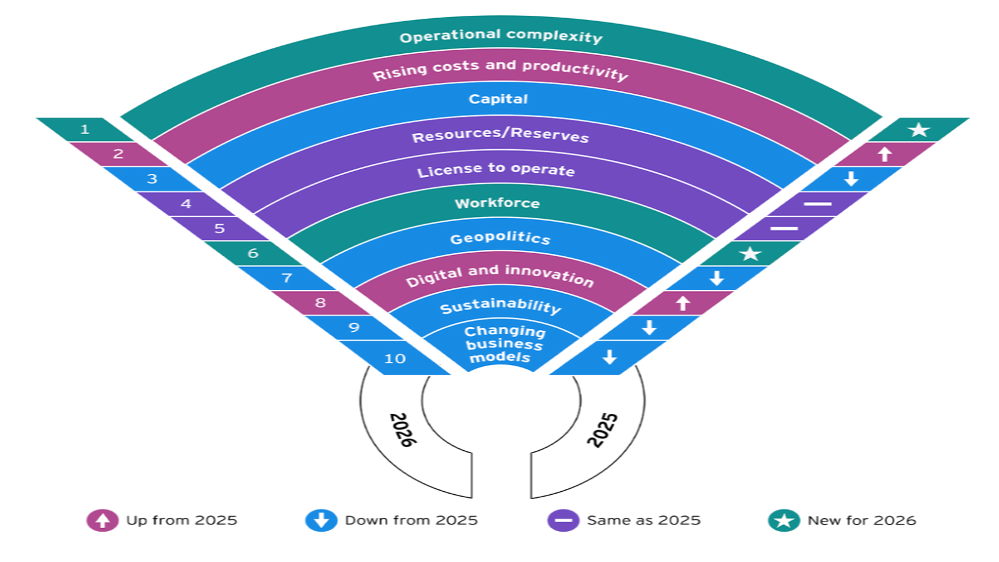
Ernst & Young’s latest Business risk report, Mining and Metals
This drop in priority indicates that many executives are unsure about their ability to meet environmental and social targets. It also reflects the reality that projects are becoming more costly and more difficult to implement. This is the bad news as reduced emphasis on sustainability in day-to-day decisions can lead to greater negative impacts on communities, the environment, and public trust.
But there is also good news. This shift forces companies and governments to think differently. Sustainability can no longer be a slogan; it must become a concrete, measurable and fully integrated approach. The companies that manage to invest wisely in environmental management, resource efficiency, community engagement and innovation will be the ones that remain competitive in the future.
For resource-rich countries like Guinea, this turning point is critical. Global demand for iron ore, bauxite, lithium and other strategic minerals is rising sharply. This creates a unique opportunity of using mineral wealth to finance genuine sustainable development. However, this requires strong governance, real transparency and close attention to social and environmental impacts.
If sustainability is slipping down the sector’s list of priorities, it is not disappearing. It is simply becoming a more demanding test. Inevitably , only those who embed it now will remain credible in a world that needs minerals, just not at any cost. Ultimately, the question is not whether sustainability is expensive or risky. The real question is : what would the cost be if it were ignored?
